
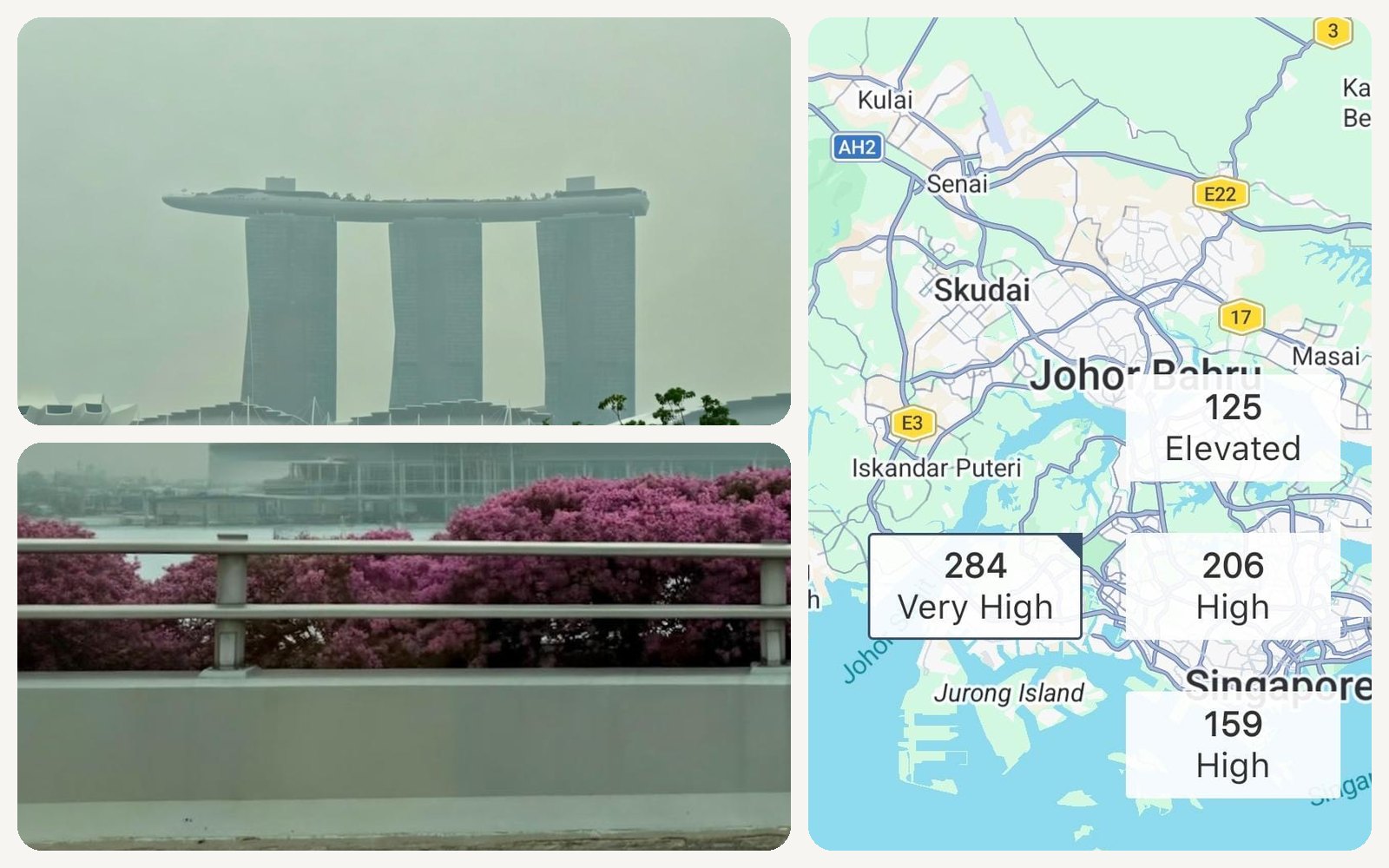
You know how it starts. You glance out of the window, the familiar block across the road has gone soft and grey, and one thought follows: the haze is back. If your child is in primary school, the questions are practical ones. Can they walk to school safely? Will PE lessons go ahead? These are best answered with a calm plan, not worry.
That calm starts with us. In my years of teaching children here, one thing has stayed constant through every haze season: children borrow their composure from the adults around them. Treat a hazy morning as a small practical problem to solve, and they will treat it the same way.
When the sky turns hazy again
Children notice the change in the sky before we think to explain it. A simple, honest explanation works best: the air has tiny particles in it, blown over from fires far away, and we are keeping them out of our lungs while the wind changes. Keep it short and unhurried.
Small precautions make a difference
You do not need special equipment for a hazy week. A few sensible habits, in line with the official advisories, go a long way:
- Check the official updates at haze.gov.sg before planning the day, instead of guessing from the view outside the window.
- Cut back on strenuous outdoor exertion, such as sports training and long walks, when the advisory says the air is unhealthy.
- Look after the air indoors. Keep windows and doors closed when the haze is heavy, and use an air purifier if you have one.
- Keep daily routines familiar. Usual homework, dinner and bedtime help children feel that everything is under control.
Drinking enough water is always a good habit, but it does not protect our lungs from haze particles. What matters more during hazy periods is limiting outdoor exposure and keeping the air indoors as clean as possible. When you explain these steps, describe what you are doing rather than what might happen; one teaches, the other frightens.
Turning an uncomfortable situation into a learning opportunity
Here is the part many parents miss: a hazy day is full of Primary Science, and you do not need a textbook to have this conversation at the dinner table. Why does the sky look hazy today and not last week? Where do the tiny particles come from?
This is how Science should feel to a child: not memorising textbook answers, but understanding the world around us. If your child enjoys this kind of wondering, it is exactly the curiosity we build on in our Primary Science programme.
Sometimes, slowing down is important
Parents often focus on homework and examinations, and understandably so. But health and well-being deserve equal attention, and a hazy week is a natural reminder of this. On heavy haze days, it is fine to slow down. Let the revision be lighter, read together, and let your child explain something they learned this week.
Sometimes, the little things we do can make a big difference in helping our children feel safe and reassured. Start by acknowledging how they feel rather than rushing to explain the situation. Involve them in simple tasks, like checking the latest haze updates together, so they feel included rather than helpless. At home, create a comfortable learning environment, perhaps moving their study table away from the window if the grey sky becomes a distraction. Instead of insisting on another round of revision, spend some time playing a board game, cooking together or solving a puzzle. More importantly, pay attention to subtle changes in their behaviour. Sometimes, children just need us to listen without asking too many questions. And remember, not every day needs to be filled with academic achievements. Finishing a chapter of a book, learning something new or simply getting a good night's sleep can be just as meaningful. After all, a slower day can still be a day well spent.
Taking care of each other
The haze will pass, as it always does. What stays is how your family handled it together.
When the sky turns grey, a family can become a small team, and sometimes it is the simplest things that bring us closer together. Be honest with your children when you do not have all the answers. It is perfectly fine to say, "I am not sure how long this will last, but here is what we can do." Children learn to trust us not because we know everything, but because we are honest with them. At the same time, remember to look after your own emotions. Children often pick up on our worries, so staying calm and showing them that we have a plan can make a difference. Take the opportunity to appreciate the people around us, from teachers adjusting school activities to neighbours looking out for one another. These small acts of kindness remind our children of the importance of community. And when the haze eventually clears, have a simple conversation about what your family learned and what you might do differently next time. After all, difficult moments can become meaningful lessons when we face them together. Let your children remember a parent who stayed calm, listened patiently and turned a grey sky into an opportunity to learn and grow together.
Frequently Asked Questions
Does drinking more water protect my child from the haze?
No. Hydration is a good general healthy habit and worth keeping up, but water does not filter or block haze particles from the lungs. Real protection comes from limiting strenuous outdoor activity, staying indoors when the advisory is unhealthy, and keeping indoor air clean with closed windows and, if you have one, an air purifier.
Should my child wear a mask during the haze?
For most children, the first precaution is to reduce outdoor activities when air quality is unhealthy, especially strenuous exercise. N95 masks are generally not necessary for short journeys such as travelling to school. Standard adult N95 masks may not fit children properly, so parents should not assume they offer effective protection. Refer to the latest NEA advisories at haze.gov.sg for guidance, particularly if your child has an existing respiratory condition.
Mr Ken Lim
Founder & Lead Educator, AZKEN
- Teaching Mathematics & Science since 2010
- Founder of AZKEN
- Primary Science, Primary Mathematics and Secondary Mathematics educator
With over a decade of experience teaching Science and Mathematics in Singapore, Mr Ken Lim has helped hundreds of students build confidence and achieve their academic goals. He believes every child can excel with the right guidance and encouragement.